
Fabricating Swissness
Architecture and Identity
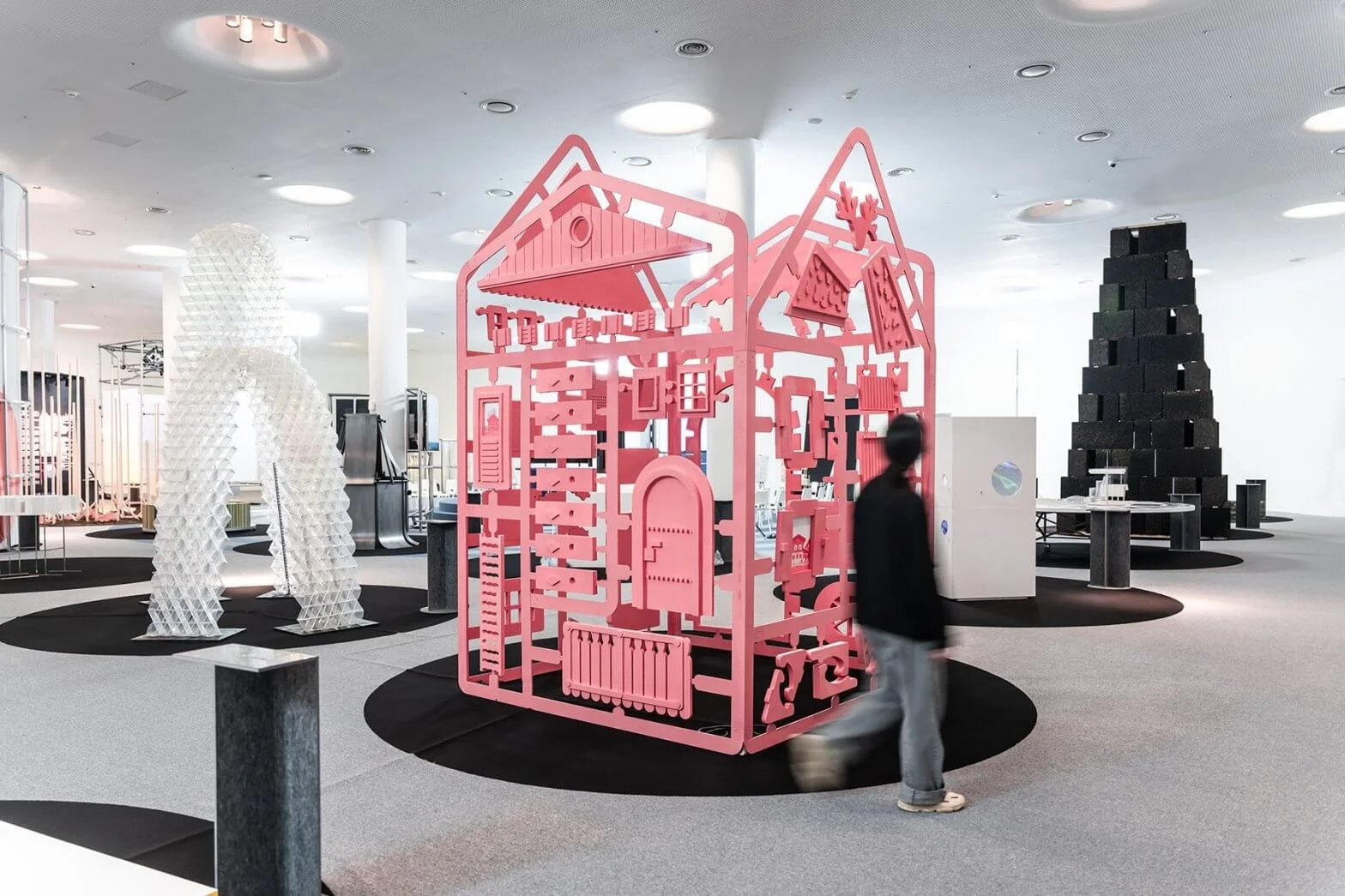
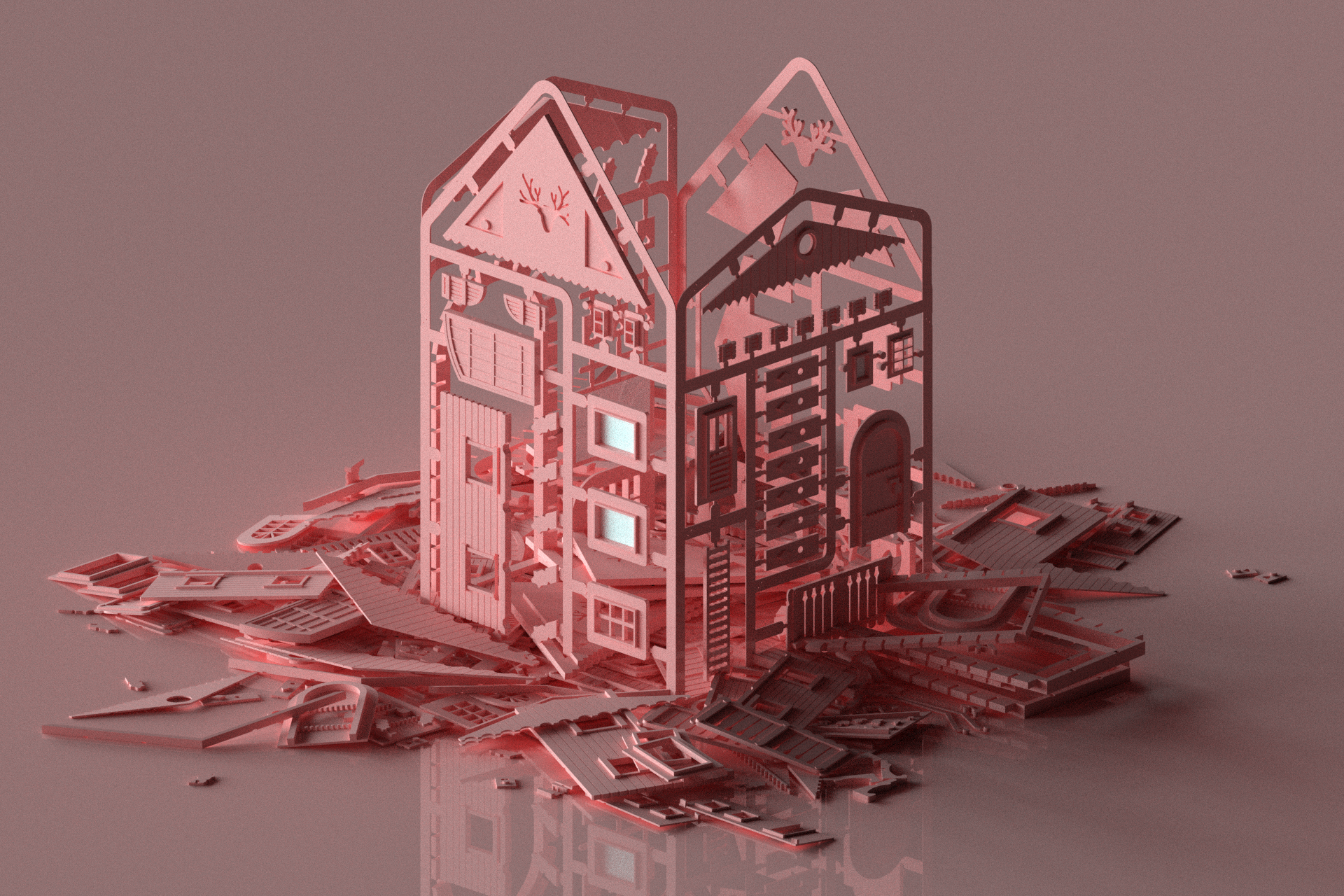
Since the 1930s, the town of New Glarus, Wisconsin, has deliberately shaped its built environment to resemble traditional Swiss chalets, appropriating alpine architectural elements as visual cues to entice visitors and bolster the local economy. This intentional cultivation is reinforced explicitly by the town’s building code, which enumerates elements necessary to evoke "Swissness."Created for the 2021 Seoul Biennale of Architecture and Urbanism, Fabricating Swissness is an interrogation of this architectural and cultural translation. Within a precise aluminum scaffold measuring 2m x 2m x 3.6m, fragments of the chalet style—vernacular imagery, audio, memorabilia, and iconic building elements—are isolated from their context and suspended in abstraction.Yet, stripped from their façades, do these components retain their identity? Can scale, color, or material diverge from their originals without losing cultural coherence? Ultimately, our goal was never to replicate the chalet itself, but to distill its identity through minimal means—to examine where authenticity ends and representation begins, and to question if "Swissness" is an architecture at all, or simply an aesthetic fiction.A collaboration led by Architecture Office
Supported by: Seoul Metropolitan Government, Seoul Biennale, ARUP, Texas A&M University
-
Work Completed under: Architecture Office
Project Type: Installation
Client: Seoul Biennale for Architecture and Urbanism
Timeline: 12 Weeks
Date: 2021
Location: Seoul, South Korea
Status: Construction Complete
-
Principals: Nicole McIntosh, Johnathan Louie
Structural Engineer: Roel van de Strat, ARUP
Audio Design: Paul Chavez, ARUP
Fabrication & Construction: Automated Fabrication Lab at Texas A&M, Ryan Garza, Michael Gayk, David Goltz, Shane Bugni, Logan Froebel and Will DiNisco
Design: Andrew G. Atwood, Oscar Garza Reza, Ryan Garza, Nari Kim, and Julia Vasilyev
Photography: Hansol Bae, Brian Griffin
-
Fabricating Swissness:
Visualization, Project management, Design support, Construction support